
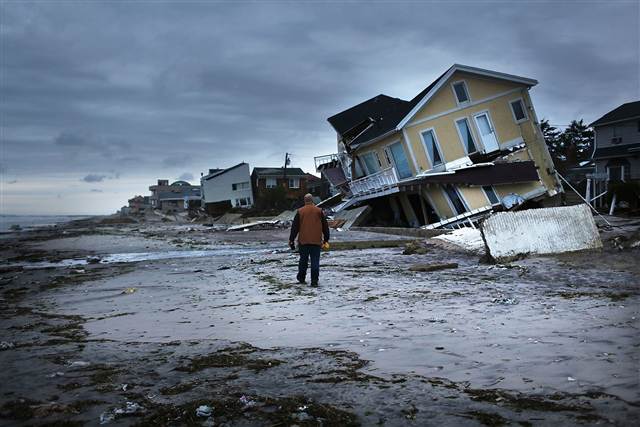















CALL 800-882-0180 News & Events ***IMPORTANT NEWS*** UPC Insurance will activate its emergency Hotline effective 08:00AM EST on 10/29/12 to assist you in reporting any claims that have occurred as a result of Hurricane Sandy. For the latest information from the National Hurricane Center, click here. | Homeowner's Inventory Know Your Stuff® – Home Inventory , the Insurance Information Institute's free online home inventory software. |
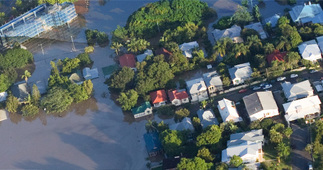
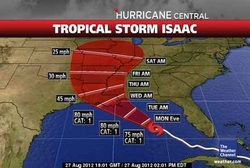
Add Comment By Randy Troutman On October 10, 2012 When discussing insured value and how a boat insurance policy will pay, most people think about a total loss. This is important but the majority of claims are partial losses. Depending on how your policy responds, you could pay several thousand dollars above your deductible. A boat insurance policy has two different ways to pay in the event of a partial loss. One is to replace the damaged items without deducting for depreciation. The second is to depreciate the damaged items. Depreciated Value is defined as Replacement Cost less depreciation. Most boat insurance companies use a non-published depreciation schedule that applies to partial losses. For example, the depreciation on a stern drive might be 7% per year, whereas the annual depreciation on canvas might be 15%. Each insurance company will apply Replacement Cost and Depreciated Value differently. Some boat insurance companies do not provide replacement cost coverage for partial losses. If the boat is insured on this policy form, then no matter the type of loss, the replacement parts are subject to depreciation. If the part costs $2,000 and is subject to 20% depreciation, you would be paid $2,000, less $400 depreciation, less your deductible. Most boat insurance companies provide replacement cost for partial losses until the boat (or items) reaches a certain age. The age will vary with each insurance company. Once a boat or item reaches that age, all partial losses are settled on an actual cash value basis. The boat insurance companies that provide replacement cost for partial losses usually name specific items that are subject to depreciation regardless of the age. Canvas, sails, cloth, trailers and plastics are examples of specifically named items. These items generally have a limited life span. They also name specific items that are subject to depreciation based on the item’s age. Outboards, stern drives and internal machinery are examples of items that change from replacement cost to depreciated value when they reach a certain age. Most insurance companies go by the age of the item to deduct depreciation. However, each insurance company has different specifically-named items and different ages which determine whether those items will be on replacement cost or depreciated value. It’s helpful to know that most companies will apply a reduced depreciation if you agree to replace with a remanufactured unit. A stern drive is a good example of an item that can be replaced with a remanufactured unit. This can save thousands of dollars in depreciation. Replacement Cost for a partial loss is what you want when available. A depreciated value can cost you several thousand dollars. United Marine Underwriters represents several boat insurance companies and we will be glad to discuss how they apply depreciation. Below are two examples to help explain how replacement cost vs. depreciated value work. Example 1 is an 8 year old stern drive boat with a $500 hull deductible that hits a submerged object. The replacement cost to the stern drive is $8000. Insurance company A provides replacement cost coverage until the stern drive is six years old. They will apply 60% depreciation (7.5% per year) to the $8000 replacement drive and then apply the $500 deductible. Insurance company A will pay $2700 ($8,000 less $4,800 depreciation, less $500 hull deductible). Insurance company B provides replacement cost coverage until the stern drive is 10 years of age. They will pay $7500 ($8000 less the $500 hull deductible). Example 2 is a boat with a $500 hull deductible that suffers wind damage to the fly bridge enclosure. The fly bridge enclosure is 2 years old and the replacement cost is $5000. Insurance company A provides replacement cost until the fly bridge enclosure is three years old. They will pay $4,500 ($5,000 less the $500 hull deductible). Insurance company B provides replacement cost but specifically names canvas as a depreciated item. Insurance company B will apply 20 percent depreciation to the replacement cost. They will pay $3,500 ($5000 replacement cost, less $1,000 depreciation, less the $500 hull deductible). The risk of catastrophic loss during hurricane season requires an innovative approach to property coverage—and a rapid response when losses occur. For over 40 years, Lexington Insurance Company has helped our brokers and clients prepare for, protect against, and recover from catastrophic losses. We are the leading U.S.-based surplus lines insurer, and a property and casualty market leader. Make sure you’re a step ahead of risk this hurricane season. Watch LexTV for the latest on hurricane risk and coverage solutions. Hurricane 2012 Update Dr. Phil Klotzbach updates his 2012 seasonal hurricane forecast and shares his outlook for the remainder of the season. This episode also introduces Lexington's new Hurricane Infographic which will help streamline the understanding of a hurricane event. All interests from Louisiana to Mississippi, Alabama and the Florida Panhandle should rush preparations to completion. If peak storm surge occurs at high tide, peak water levels above ground could reach the following depths as Isaac moves by: - Southeast Louisiana, Miss., Ala. coasts: 6-12 feet - South-central Louisiana: 3-6 feet - Florida Panhandle: 3-6 feet - Florida west coast from Apalachicola to south of Naples: 1-3 feet Even as Isaac's center of circulation moves by, locally heavy rainbands can be expected. Another 1-3" of rain is possible in central and south Florida with locally higher amounts. Isolated storm total rainfalls of 15" are possible in central and South Florida. Rainfall amounts over 10" are likely as Isaac slows down immediately prior to, and after landfall, in southeast Louisiana, southern Alabama, Mississippi and the western Florida Panhandle. Isolated 20" amounts are possible. Hurricane threat index, current information, satellite imagery, watches/warnings and computer model track graphics are below. (TRACK ISAAC: Interactive hurricane tracker) View more expert analysis from Senior Meteorologist Stu Ostro at our Tropical Update article. You can find a detailed look at the Gulf Coast storm surge, wind and flooding threats by clicking on this link and you can ensure you know which friends may be in harms way through our My Friends Weather tool. (MORE: Live updates and analysis on Isaac) Before a Flood What would you do if your property were flooded? Are you prepared? Even if you feel you live in a community with a low risk of flooding, remember that anywhere it rains, it can flood. Just because you haven't experienced a flood in the past, doesn't mean you won't in the future. Flood risk isn't just based on history; it's also based on a number of factors including rainfall , topography, flood-control measures, river-flow and tidal-surge data, and changes due to new construction and development. Flood-hazard maps have been created to show the flood risk for your community, which helps determine the type offlood insurance coverage you will need since standard homeowners insurance doesn't cover flooding. The lower the degree of risk, the lower the flood insurance premium. In addition to having flood insurance, knowing following flood hazard terms will help you recognize and prepare for a flood. To prepare for a flood, you should:
TYPE OF FLOOD MAP CHANGES WHAT YOU SHOULD KNOW WHAT YOU SHOULD SAY Low- or moderate-risk zone (B, C, X) changing to a high-risk zone (e.g. AE, VE) or Change in Base Flood Elevation Grandfathering Offers Savings· The National Flood Insurance Program (NFIP) has “grandfather” rules to recognize policyholders who have either built in compliance with the flood map or who maintain continuous coverage. These rules allow such policyholders to benefit in the rating for that building. · Grandfathering is available for new purchasers as well as existing customers. · Always use the new map if it will provide a more favorable premium (lower rate). · Your building has been designated in a high-risk area for flooding. · You will be required to purchase a flood policy if you carry a mortgage from a federally regulated lender. · If you don’t carry a mortgage, you should protect your home with flood insurance. National statistics show that you are 3 times more likely to have damage by a flood than by fire. · Purchasing before the map revision allows you to save on insurance. Loyal Customers Can Keep Existing Zone (Pre- & Post- FIRM) · Customers, who buy a policy before maps are adopted and maintain coverage, can retain the lower-risk zone rate. · Eligible customers can purchase a PRP now. It will renew to an X zone rated standard policy. · Have a policy: maintain continuous coverage. · A policy can be assigned to future property owner. · Buy now to save later. · Renew to stay protected and save money. Show Compliance With a Previous FIRM for Lower Costs (Post- FIRM only) · To keep existing zones when the structure was built: Get a copy of FIRM effective at time of construction or a compliance letter from community official. · To keep existing BFE when the structure was built: Get Elev. Cert, and copy of FIRM effective at time of construction; or compliance letter from the community official. · Lower cost options: show building was built in compliance at time of construction. · Makes you eligible for a lower rate, keeps costs DOWN. High-risk zone (e.g. AE, VE) changing to a low- or moderate-risk zone (X, shaded X) Conversion Offers Savings · Write a Preferred Risk Policy (PRP). · Use existing policy’s current effective date, and use closest coverage limit or next highest options if no exact match. · Submit PRP application, and insured signed conversion form. · Your risk is reduced, not removed! · Eligible for low-cost, Preferred Risk Policy · Stay protected and get money back once maps are adopted. · No gaps in coverage; no additional money up front. · 20-25% of all flood claims occur in low- or moderate-risk areas. No Change Review of Current Coverage Ensures Protection· Do they have flood insurance? · If so, is the building limit up-to-date? · Contents coverage provided and limit up-to-date? · Homeowners insurance doesn’t cover damage due to floods. · Floods happen anytime, anywhere. · Your home is a major investment—protect it. Something to share; the National & State Do Not Call List: 888-383-1222 National Do Not Call List 866-231-2255 State Do Not Call List 888-567-8688 Credit Card Do Not Call List Just call to get on the listing. WHAT YOU SHOULD KNOW ABOUT THE NATIONAL DO NOT CALL REGISTRY The National Do Not Call Registry gives you a choice about whether to receive telemarketing calls at home. Most telemarketers should not call your number once it has been on the registry for 31 days. If they do, you can file a complaint at this Website. You can register your home or mobile phone for free. MIAMI (Reuters) - Tropical Storm Chris strengthened in the North Atlantic off Newfoundland on Thursday, becoming the season's first Atlantic hurricane, forecasters at the U.S. National Hurricane Center said. Chris had top winds of 75 miles per hour (120 km per hour) and was about 625 miles (1,005 km) southeast of Cape Race, Newfoundland. It posed no threat to land, forecasters said. Chris formed unusually far north for an early season hurricane, and was expected to make a slow loop before weakening over cooler waters during the weekend. Forecasters also kept watch on a low pressure area associated with a broad mass of thunderstorms in the southeastern Gulf of Mexico and northwestern Caribbean. It had a 30 percent chance of developing into a tropical depression or tropical storm in the next couple of days, the forecasters said. That system soaked southern Florida and could bring heavy rain and flooding to Mexico's Yucatan Peninsula and western Cuba, the forecasters said. It was too early to know whether the system would threaten energy interests clustered in the northern Gulf of Mexico. The Atlantic hurricane season runs from June 1 to Nov. 30, but got off to an early start this year. Tropical Storm Alberto quickly fizzled off South Carolina and Tropical Storm Beryl soaked thesoutheastern United States in May. The U.S. National Oceanic and Atmospheric Administration predicted there would be nine to 15 tropical storms in the Atlantic basin this year, with four to eight strengthening into hurricanes. (Reporting By Jane Sutton; Editing by Vicki Allen) As Hurricane Irene approaches our area, we wanted to make sure you and your customers were aware of the steps you can take to stay safe and our claim response plans as the storm approaches. Staying safe in a hurricane or windstorm » Understanding wind damage » Safety for individuals Create a disaster plan. Plan an evacuation route in advance and determine where you would go if you were told to evacuate.
In addition, you and your business insurance customers should consider taking the following precautions to help protect people and property and guard against disruption of operations: Review your business continuity plan and communicate emergency evacuation and business interruption instructions to employees. If you don’t have a written plan, now is the time to create one. Each business should have an emergency plan including a detailed procedure for evacuation, a checklist for shutting down processes and protecting buildings, contents, equipment, and yard storage. Procedures should include salvage instructions to follow post-event.
Travelers Claim Response Travelers’ National Catastrophe Center is monitoring this event closely, and we have already begun staging response resources near the hurricane’s estimated path. With five call centers prepared to take loss notices 24-7, a fleet of five Mobile Claim Offices prepared to deploy anywhere on the East Coast within hours, a 300-person dedicated CAT team, and a national workforce strategy that enables us to draw on the resources of our 13,000-person claim organization, you can rest assured we will have the right resources in the right place to help you and your customers recover from the storm. Claim Reporting Please encourage your customers to report claims directly to Travelers as soon as possible after the storm. The sooner we learn about losses, the sooner we can help. Personal Insurance: 1.800.CLAIM33 (1.800.252.4633)
As a reminder, Travelers suspends agency binding authority when a Tropical Storm or a Hurricane event is expected to impact a geographic area. Moratoriums are currently in effect for some business units for potentially affected states. For a current list of counties with suspended binding authority, please log into Agent HQ (www.travelersagents.com) or contact your underwriter. |


RSS Feed


