
 As Hurricane Irene approaches our area, we wanted to make sure you and your customers were aware of the steps you can take to stay safe and our claim response plans as the storm approaches.
Staying safe in a hurricane or windstorm » Understanding wind damage » Safety for individuals Create a disaster plan. Plan an evacuation route in advance and determine where you would go if you were told to evacuate.
In addition, you and your business insurance customers should consider taking the following precautions to help protect people and property and guard against disruption of operations: Review your business continuity plan and communicate emergency evacuation and business interruption instructions to employees. If you don’t have a written plan, now is the time to create one. Each business should have an emergency plan including a detailed procedure for evacuation, a checklist for shutting down processes and protecting buildings, contents, equipment, and yard storage. Procedures should include salvage instructions to follow post-event.
Travelers Claim Response Travelers’ National Catastrophe Center is monitoring this event closely, and we have already begun staging response resources near the hurricane’s estimated path. With five call centers prepared to take loss notices 24-7, a fleet of five Mobile Claim Offices prepared to deploy anywhere on the East Coast within hours, a 300-person dedicated CAT team, and a national workforce strategy that enables us to draw on the resources of our 13,000-person claim organization, you can rest assured we will have the right resources in the right place to help you and your customers recover from the storm. Claim Reporting Please encourage your customers to report claims directly to Travelers as soon as possible after the storm. The sooner we learn about losses, the sooner we can help. Personal Insurance: 1.800.CLAIM33 (1.800.252.4633)
As a reminder, Travelers suspends agency binding authority when a Tropical Storm or a Hurricane event is expected to impact a geographic area. Moratoriums are currently in effect for some business units for potentially affected states. For a current list of counties with suspended binding authority, please log into Agent HQ (www.travelersagents.com) or contact your underwriter.
0 Comments
Cape Cod, Massachusetts  As Hurricane Irene approaches the east coast Disaster Specialists would like to remind everyone that our staff will be on-call throughout the storm 24/7 for any and all emergencies that may arise. Serving Cape Cod, the Islands, the South Coast and the South Shore. 1-800-675-3622
info@disasterspecialists.com Emergency Tips:
Since 1985 Disaster Specialists has been helping home and business owners with the unexpected. Fire, Flood, Vandalism, Mold, Natural Disasters and even some not-so natural disasters we are here to help. Our crews are on call 24 hours a day, 7 days a week, 365 days a year. Through all phases from clean up to reconstruction. Disaster Specialists will work with you and your insurance company to have you back on your feet as quickly as possible. At Disaster Specialists we make disasters disappear! Posted by Michael McDermott on Wed, Aug 24, 2011 @ 09:36 AM 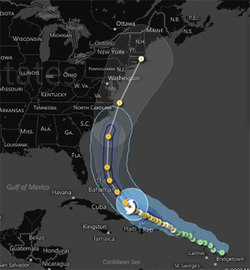 It May Not Be Irene, but Another Hurricane is Inevitable!It's been six years since a hurricane struck the southeastern United States and longer than that for New England - so with the possibility that Hurricane Irene could head to New England, it makes sense to make sure that you have taken steps to ensure your safety and secure your property. For more information on creating aFamily Emergency Plan and an Emergency Supply Kit check out Plymouth Rock’sHurricane Preparedness page!
In the meantime we have developed a quick “to do” list on the chance that Irene could head north. Things You Can Do in Preparation for a Hurricane
0 Comments Click here to read/write commentsTags: Plymouth Rock Assurance, Hurricane Preparedness |


better Insurance
|



 RSS Feed







Arthur D. Calfee Insurance Agency, Inc. is a friendly local insurance agency proudly offering Massachusetts, Cape Cod and the Islands. A-Excellent AM Best rating, A+ Excellent by the BBB
Using innovative thinking, cutting-edge tools and expert resources at national and local levels, we deliver the best possible outcome on every policy we manage. Need Home Insurance? Easy, Fast, & Secure Home Insurance. Get Free Quotes 100% Online Now! Available 24/7. Affordable Rates. Cover Your Biggest Investments. Get a homeowners insurance quote, find coverage options. We'll help you understand and customize the right home insurance coverage for you.
Home is where your heart is—along with a healthy chunk of your net worth. Get started today with a free homeowner's quote.
Compare home insurance quotes today and save on protection for your biggest investment. Build a Custom Policy & Make the Switch! Our local underwriting professionals focus exclusively on finding the best home insurance, homeowner's insurance, hazard insurance, investment property insurance, flood insurance, flood zone information, vacation home insurance, second home insurance, auto insurance, collector car insurance, business insurance, general liability insurance, property insurance, professional liability insurance, contractor's liability insurance, worker's comp insurance, key man insurance, whole life insurance, term life insurance, group or personal disability, & long-term care insurance policies to patrons in the following Cape Cod, Massachusetts towns, communities and villages: Barnstable, Bourne, Pocasset, Brewster, Buzzards Bay, Centerville, Chatham, Cotuit, Craigville, Dennis, East Dennis, Eastham, Falmouth, East Falmouth, Hatchville, West Falmouth, North Falmouth, Woods Hole, Harwich, Hyannis, Hyannisport, Martha's Vineyard, Nantucket, Marstons Mills, Mashpee, Orleans, Osterville, Provincetown, Sandwich, Sagamore, Sagamore Beach, Truro, Wellfleet, Yarmouth, and Yarmouthport. Real-Time Pricing. Insurance coverage: Wind Damage, Fire Loss, Water Damage. Protect your home and belongings. Low Rates For Your Best Options to Save Money On Great Coverage! Get a quote today. Home insurance helps protect your house and your family.
Using innovative thinking, cutting-edge tools and expert resources at national and local levels, we deliver the best possible outcome on every policy we manage. Need Home Insurance? Easy, Fast, & Secure Home Insurance. Get Free Quotes 100% Online Now! Available 24/7. Affordable Rates. Cover Your Biggest Investments. Get a homeowners insurance quote, find coverage options. We'll help you understand and customize the right home insurance coverage for you.
Home is where your heart is—along with a healthy chunk of your net worth. Get started today with a free homeowner's quote.
Compare home insurance quotes today and save on protection for your biggest investment. Build a Custom Policy & Make the Switch! Our local underwriting professionals focus exclusively on finding the best home insurance, homeowner's insurance, hazard insurance, investment property insurance, flood insurance, flood zone information, vacation home insurance, second home insurance, auto insurance, collector car insurance, business insurance, general liability insurance, property insurance, professional liability insurance, contractor's liability insurance, worker's comp insurance, key man insurance, whole life insurance, term life insurance, group or personal disability, & long-term care insurance policies to patrons in the following Cape Cod, Massachusetts towns, communities and villages: Barnstable, Bourne, Pocasset, Brewster, Buzzards Bay, Centerville, Chatham, Cotuit, Craigville, Dennis, East Dennis, Eastham, Falmouth, East Falmouth, Hatchville, West Falmouth, North Falmouth, Woods Hole, Harwich, Hyannis, Hyannisport, Martha's Vineyard, Nantucket, Marstons Mills, Mashpee, Orleans, Osterville, Provincetown, Sandwich, Sagamore, Sagamore Beach, Truro, Wellfleet, Yarmouth, and Yarmouthport. Real-Time Pricing. Insurance coverage: Wind Damage, Fire Loss, Water Damage. Protect your home and belongings. Low Rates For Your Best Options to Save Money On Great Coverage! Get a quote today. Home insurance helps protect your house and your family.
Testimonials & Endorsements for the Best Insurance Agent on Cape Cod, MA
PHONE: (800) 479-2601 CUSTOMER SUPPORT & SERVICE
Please note: The above is meant as general information to help you understand the different aspects of insurance. This information is not an insurance policy, does not refer to any specific insurance policy, and does not modify any provisions, limitations, or exclusions expressly stated in any insurance policy. Descriptions of all coverages and other features on this page are necessarily brief; in order to fully understand the coverages and other features of a specific insurance policy, we encourage you to read the applicable policy and/or speak to an insurance representative. Coverages and other features vary between insurers, vary by state, and are not available in all states. Whether an accident or other loss is covered is subject to the terms and conditions of the actual insurance policy or policies involved in the claim. References to average or typical premiums, amounts of losses, deductibles, costs of coverages/repair, etc., are illustrative and may not apply to your situation. We are not responsible for the content of any third-party sites linked from this page.
© 2023 Copyright, Arthur D. Calfee Insurance Agency, Inc.
Calfee Cares.® Privacy Policy
Calfee Cares.® Privacy Policy